
Dr. Jagathrakshakan
Content

Dr. Sundeep Anand
Content
Managing Director
Content

chair person
Content
Vice Chancellor
Content
pro chancellor
Content
Additional Registrar
Content
pro vice chancellor
Content
?
Content
?
Content
?
Content
Core Committee members

Prof. Jordi Albo-Canals
Assoc. Prof. Marcel Heerink
Assoc. Prof. Marcel Heerink
Dr. Jordi Albo-Canals is a roboticist and academic entrepreneur focused on human behavior modeling, human–robot interaction, and emotion AI. As Co-Founder & Chief Science Officer of Lighthouse -Disruptive Innovation Group, he translates responsible research into products across all industries but with special focus on healthtech and edtec
Dr. Jordi Albo-Canals is a roboticist and academic entrepreneur focused on human behavior modeling, human–robot interaction, and emotion AI. As Co-Founder & Chief Science Officer of Lighthouse -Disruptive Innovation Group, he translates responsible research into products across all industries but with special focus on healthtech and edtech, and develops behavioral-intelligence methods to manage risk and uncertainty in innovation. In collaboration with Barcelona’s Children Hospital - Sant Joan de Deu Innovation, where projects such as Emotional Navigation 4 Kids and AICCELERATE use social robots to connect patients, families, and care teams. Previously, he worked with the MIT Media Lab’s Personal Robots Group and Tufts University, co-founded the New Friends conference, and led initiatives including CORP and WeShareCare. He also led The Robotics Lab at NTT DATA and La Salle - Ramon Llull University. Honors include the 2012 local Alan Turing Award, RO-MAN 2015 Best Paper, and participate in the Spain’s 2022 Best AI-Compliance Project.
Assoc. Prof. Marcel Heerink
Assoc. Prof. Marcel Heerink
Assoc. Prof. Marcel Heerink
Assoc. Prof. Marcel Heerink is a Dutch researcher, author, and ethical philosopher recognized for his pioneering work on social robotics for vulnerable populations. His research integrates empirical science, Buddhist ethics, and practical applications in healthcare and education.
Currently serving at Saxion University's Ethics and Technolo
Assoc. Prof. Marcel Heerink is a Dutch researcher, author, and ethical philosopher recognized for his pioneering work on social robotics for vulnerable populations. His research integrates empirical science, Buddhist ethics, and practical applications in healthcare and education.
Currently serving at Saxion University's Ethics and Technology ResearchGroup, Heerink has led research teams at Windesheim University, focusingon social robots in therapeutic contexts with elderly individuals, people withdementia, children with autism, and long-term hospitalized children.
Heerink earned his PhD from the University of Amsterdam in 2010 with a dissertation on robot acceptance that introduced the Almere Model for technology acceptance. This framework, which incorporates social dimensions such as trust, social presence, and enjoyment, has become foundational in human-robot interaction research.
He argues that robots should facilitate genuine human care rather than replace it, positioning "suspension of disbelief" as central to beneficial human-robot interaction. In his view, humans' capacity for compassion and imagination represents strengths that technology should enhance.
Prof. Daniel Hannon
Assoc. Prof. Marcel Heerink
Prof. Víctor López Cabrera
Daniel J. Hannon, Ph.D. is a Psychologist and Professor of the Practice in Mechanical Engineering at Tufts University. As a professor, his domain is in Human Factors Engineering, in which he teaches in Data Science, Human-Machine Systems, and Assistive Device Design. As a mental health provider, his practice focuses in particular on the
Daniel J. Hannon, Ph.D. is a Psychologist and Professor of the Practice in Mechanical Engineering at Tufts University. As a professor, his domain is in Human Factors Engineering, in which he teaches in Data Science, Human-Machine Systems, and Assistive Device Design. As a mental health provider, his practice focuses in particular on the mental health needs of people of all ages on the Autism Spectrum, utilizing educational technology and social robotics to promote socialization and to develop frustration tolerance. His research includes work in vision science, applications of machine learning to understanding the aging brain, human-machine teaming, and various applications in transportation safety, medical and consumer product design and safety, social robotics and educational technology. Dr. Hannon earned his PhD from Brown University in Providence, RI.
Prof. Víctor López Cabrera
Dr. Irene Maxine Pepperberg
Prof. Víctor López Cabrera
Prof. Víctor López Cabrera is a Full Professor at the Technological University of Panama (UTP), Faculty of Computer Systems Engineering. He brings more than 35 years of academic and professional experience in AI, databases, collaborative systems, telemedicine, social robotics, digital health, and Global Software Development.
He is the Foun
Prof. Víctor López Cabrera is a Full Professor at the Technological University of Panama (UTP), Faculty of Computer Systems Engineering. He brings more than 35 years of academic and professional experience in AI, databases, collaborative systems, telemedicine, social robotics, digital health, and Global Software Development.
He is the Founder of the first Internet node in Panama, contributing to national connectivity and digital transformation. Víctor has collaborated on international initiatives supported by the National Science Foundation (USA), the OAS, and Latin American research networks. He is an Advisor and innovation leader in BIOS Softwares, Aiyon Consulting, Genos Global, Domotik, IQHomes, SmileWay, Digital Dreams, Silver Guardian, X Financial Reports, and Maxia Latam.
Recognized for contribution in digital health, entrepreneurship, and applied research in emerging technologies, Víctor focuses on Computer Social Literacy for older adults and the Silver Economy applying AI to foster inclusion and innovation.
Prof. Chris Krägeloh
Dr. Irene Maxine Pepperberg
Dr. Irene Maxine Pepperberg
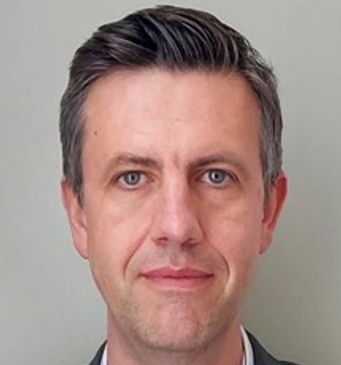
Prof. Chris Krägeloh, PhD, is a Professor of Psychology at Auckland University of Technology, New Zealand. His research focuses on the psychosocial and ethical aspects of artificial intelligence (AI) and social robotics, particularly investigating human attitudes toward intelligent systems, including issues of acceptance and acceptability
Prof. Chris Krägeloh, PhD, is a Professor of Psychology at Auckland University of Technology, New Zealand. His research focuses on the psychosocial and ethical aspects of artificial intelligence (AI) and social robotics, particularly investigating human attitudes toward intelligent systems, including issues of acceptance and acceptability. He is a founding member of the Psychosocial Aspects in Robotics (PAIR) Lab. Chris also conducts empirical and conceptual research in mindfulness and health outcome measurement. Chris has authored more than 150 journal articles and several books, including Mindfulness-Based Intervention Research, and co-edited major reference works such as the International Handbook of Behavioral Health Assessment. He serves as joint Editor-in-Chief of Mindfulness (Springer Nature), the leading journal in the field, and is co-founder and Editor-in-Chief of the newly launched Journal of Psychology & AI (Taylor & Francis).
Dr. Irene Maxine Pepperberg
Dr. Irene Maxine Pepperberg
Dr. Irene Maxine Pepperberg
Dr. Irene Maxine Pepperberg (born April 1, 1949) is an American scientist noted for her studies in animal cognition, particularly in relation to parrots. She has been a professor, researcher and/or lecturer at multiple universities, and she is currently an Adjunct Research Professor at Boston University.[1] Pepperberg also serves on the A
Dr. Irene Maxine Pepperberg (born April 1, 1949) is an American scientist noted for her studies in animal cognition, particularly in relation to parrots. She has been a professor, researcher and/or lecturer at multiple universities, and she is currently an Adjunct Research Professor at Boston University.[1] Pepperberg also serves on the Advisory Council of METI (Messaging Extraterrestrial Intelligence). She is well known for her comparative studies into the cognitive fundamentals of language and communication, and she was one of the first to work on language learning in animals other than primate species (exemplified by the Washoe project), by extension to a bird species. Pepperberg is also active in wildlife conservation, especially in relation to parrots.
Prof. Ahmed Al-Jumaily
Prof. Ahmed Al-Jumaily
Prof. Ahmed Al-Jumaily
Professor Al-Jumaily, is the founder and Director of AUT’s Institute of Biomedical Technologies.
He is the Editor-in-Chief of the ASME Journal of Engineering and Science in Medical Diagnostics and Therapy, the Editor for the ASME monograph series-Biomedical and Nanomedical Technologies and has been on the editorial and refereeing boards f
Professor Al-Jumaily, is the founder and Director of AUT’s Institute of Biomedical Technologies.
He is the Editor-in-Chief of the ASME Journal of Engineering and Science in Medical Diagnostics and Therapy, the Editor for the ASME monograph series-Biomedical and Nanomedical Technologies and has been on the editorial and refereeing boards for several international journals. He has published more than 360 papers in international journals and conference proceedings including two ASME books on Vibration and Acoustics in Biomedical Applications and a third one on CPAP devices.
Al-Jumaily’s current research focuses on biomedical applications; particular interest in the application of vibration and acoustics to airways constriction therapies and artery non-invasive diagnostics.
Prof. Loulin Huang
Prof. Ahmed Al-Jumaily
Prof. Ahmed Al-Jumaily
Loulin Huang is a professor of Robotics and Mechatronics at Auckland University of Technology. He obtained Bachelor's and Master's degrees in Mechanical Engineering from Huazhong University of Science and Technology (China), a Master's degree in Electrical and Electronic Engineering from Nanyang Technology University (Singapore), and a Ph
Loulin Huang is a professor of Robotics and Mechatronics at Auckland University of Technology. He obtained Bachelor's and Master's degrees in Mechanical Engineering from Huazhong University of Science and Technology (China), a Master's degree in Electrical and Electronic Engineering from Nanyang Technology University (Singapore), and a PhD degree from the National University of Singapore. He has over 35 years of experience in research and teaching in the areas of robotics and mechatronics. He has completed more than thirty industrial or government-funded projects in a wide range of industrial applications and have authored more than 140 research publications.
Dr. Oleg N. Medvedev
Prof. Ahmed Al-Jumaily
Prof. Humberto Rodriguez
Oleg N. Medvedev, PhD is an Associate Professor at the University of Waikato, New Zealand. His research focuses on applications of artificial intelligence (AI) and machine learning (ML) algorithms to health and developmental psychology. Oleg investigates complex psychological, neurological, and immunological processes employing AI and ML
Oleg N. Medvedev, PhD is an Associate Professor at the University of Waikato, New Zealand. His research focuses on applications of artificial intelligence (AI) and machine learning (ML) algorithms to health and developmental psychology. Oleg investigates complex psychological, neurological, and immunological processes employing AI and ML to develop predictive models for cognitive decline and stroke risks. He has authored over 160 peer-reviewed journal articles and over 30 book chapters and is co-author of Mindfulness-Based Intervention Research: Characteristics, Approaches, and Developments and co-editor of International Handbook of Behavioral Health Assessment. Oleg is joint Editor-in-Chief of two international journals Mindfulness and Journal of Psychology and AI.
Prof. Humberto Rodriguez
Prof. Ing. Karla Arosemena
Prof. Humberto Rodriguez
Prof. Humberto Rodriguez is a Full professor at the Mechanical Engineering Department of UTP in Robotics, Computer Vision, Manufacturing and Industrial Processes Control and Automation. He was a research director at UTP and present director of the Manufacturing Center for Innovation, which focuses on providing support to entrepreneurs thr
Prof. Humberto Rodriguez is a Full professor at the Mechanical Engineering Department of UTP in Robotics, Computer Vision, Manufacturing and Industrial Processes Control and Automation. He was a research director at UTP and present director of the Manufacturing Center for Innovation, which focuses on providing support to entrepreneurs through product development, incubation and technical training.
Humberto is the Co-Founder of Cobots Lab, a member of Flying Labs global network, specializing in the formulation and execution of social innovation projects in the fields of STEM education, agriculture, environment and health using robotic autonomous vehicles.
His current research focuses on the design and control of exoskeletons and bionic arms, swarm robots, robotic systems for mangrove reforestation, and Intelligent Interfaces for Post- Stroke Rehabilitation and Engineering Education.
Prof. Ing. Karla Arosemena
Prof. Ing. Karla Arosemena
Prof. Ing. Karla Arosemena
Prof. Ing. Karla Arosemena is the Director of International Relations and a Professor, Computer Systems Engineering at Universidad Tecnológicade Panamá. Currently, as a Director of International Relations at the Technological University of Panama (UTP), she is leading international cooperation initiatives and foster global academic partne
Prof. Ing. Karla Arosemena is the Director of International Relations and a Professor, Computer Systems Engineering at Universidad Tecnológicade Panamá. Currently, as a Director of International Relations at the Technological University of Panama (UTP), she is leading international cooperation initiatives and foster global academic partnerships. Previously, she directed the Office of Innovation and Educational Technology, where she spearheaded the university’s first institutional assessment of teachers’ digital competencies under the European DigCompEdu framework, promoting strategic capacity-building in digital education.
Previously, she served as Vice President for Technology and Innovation at Tocumen International Airport, overseeing IT infrastructure projects that enhanced operational efficiency and passenger experience. She is an active member of professional organizations such as IEEE, PMI, and ACM, and currently serve as President of the IEEE Computer Society Panama Chapter, promoting technological advancement and professional collaboration in Computing.
Prof. Ilka A. Banfield
Prof. Ing. Karla Arosemena
Prof. Ing. Karla Arosemena
Prof. Ilka A. Banfield iElectromechanical engineer with more than 15 years of experience in industrial automation, advanced control, and technological development. She has participated in innovative projects in collaboration with the productive sector, focusing on process improvement, energy efficiency, and technology transfer. She has al
Prof. Ilka A. Banfield iElectromechanical engineer with more than 15 years of experience in industrial automation, advanced control, and technological development. She has participated in innovative projects in collaboration with the productive sector, focusing on process improvement, energy efficiency, and technology transfer. She has also served technical consulting committees in manufacturing companies and development organizations.
Active contributor to the advancement of scientific and research initiatives in engineering. Leader and collaborator in research projects in the fields of control, automation, robotics, and artificial intelligence. Serves on the Organizing Committee of the Latin American Congress on Automation and Robotics (LACAR) and on the Scientific Committee of The International Conference Series on Climbing and Walking Robots and the Support Technologies for Mobile Machines (CLAWAR).
Assoc. Prof. Mohan Rajesh Elara
Assoc. Prof. Mohan Rajesh Elara
Assoc. Prof. Mohan Rajesh Elara
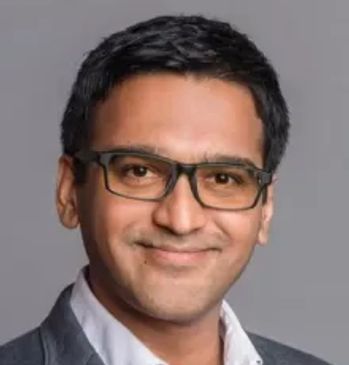
Dr. Mohan is currently a Provost’s Chair Professor and Associate Professor with the Engineering Product Development Pillar at the Singapore University of Technology and Design (SUTD). His research interests are in robotics with an emphasis on self-reconfigurable platforms and research problems related to robot ergonomics and autonomous sy
Dr. Mohan is currently a Provost’s Chair Professor and Associate Professor with the Engineering Product Development Pillar at the Singapore University of Technology and Design (SUTD). His research interests are in robotics with an emphasis on self-reconfigurable platforms and research problems related to robot ergonomics and autonomous systems. His team at SUTD has attained global leadership in terms of research in this area. He has published more than 200 papers in leading journals, books and conferences.
He is the co-founder of Lionsbot, a robotics company that develops and deploys a wide range of autonomous cleaning robots. He is also a visiting faculty member of the International Design Institute at Zhejiang University, China.
Dr Rajkumar Velu
Assoc. Prof. Mohan Rajesh Elara
Assoc. Prof. Mohan Rajesh Elara
Rajkumar Velu is an Assistant Professor at the Indian Institute of Technology Jammu, India. He completed PhD at the Auckland University of Technology, New Zealand, in selective laser sintering of specific biopolymer composites for biomedical application. Dr Velu’s research interests encompass engineering design, optimization, and develop
Rajkumar Velu is an Assistant Professor at the Indian Institute of Technology Jammu, India. He completed PhD at the Auckland University of Technology, New Zealand, in selective laser sintering of specific biopolymer composites for biomedical application. Dr Velu’s research interests encompass engineering design, optimization, and developing advanced manufacturing processes (Additive Manufacturing) and materials for designing and fabrication for fuel cell, biomedical and aerospace applications. Moreover, based on his current research practice, he is involved in developing Artificial Intelligence into an additive manufacturing process to fabricate end-use products and eliminate post-mortem analysis.
Assoc. Prof. Mohan Rajesh Elara